

I climbed the hill with an overwhelming feeling of joy and accomplishment – I’ve made it just in time, just before sun set down. Like in many other places I’ve visited, a body of water is within sight – an important neighbour for the dead. The stone ship looks like it’s ready to sail off any moment, perhaps so the dead can keep on sailing in their everlasting dream.
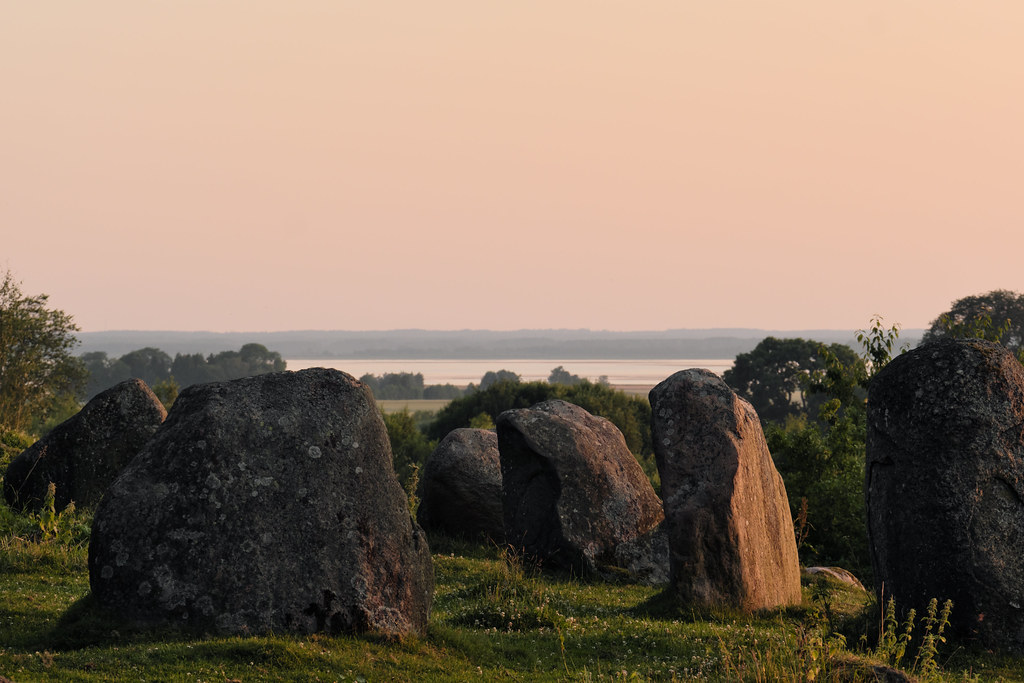
Amundtorp’s grave field is located on the west slope of Billingen in Skara Municipality, with a view of Lake Hornborgasjön. The place is also known as Högarna; in the 18th century the place was called Högängen – the high meadow.

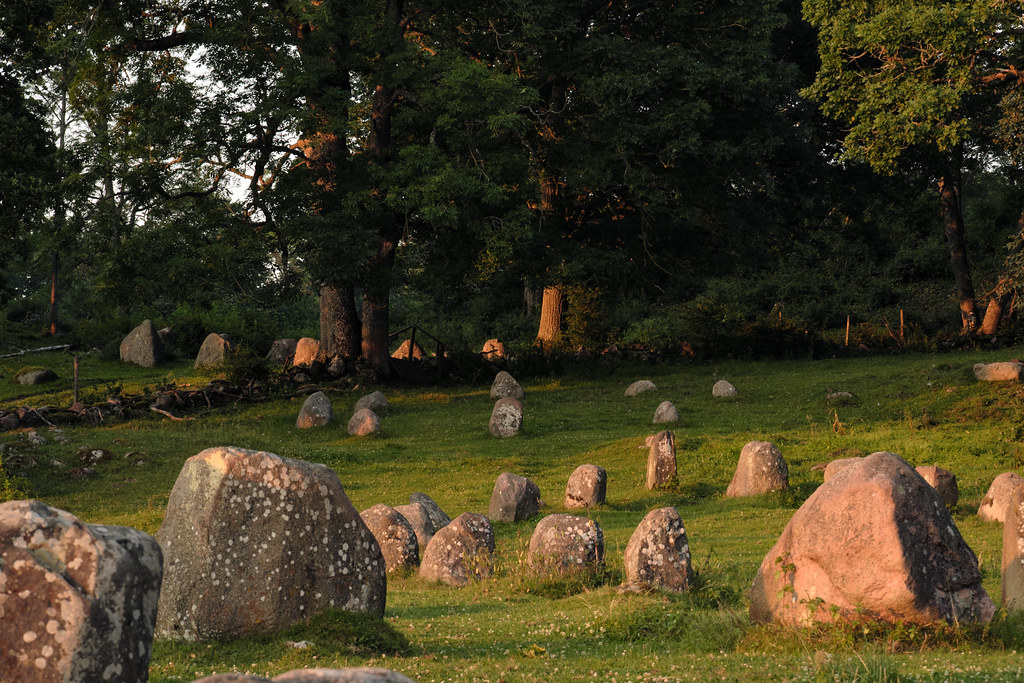
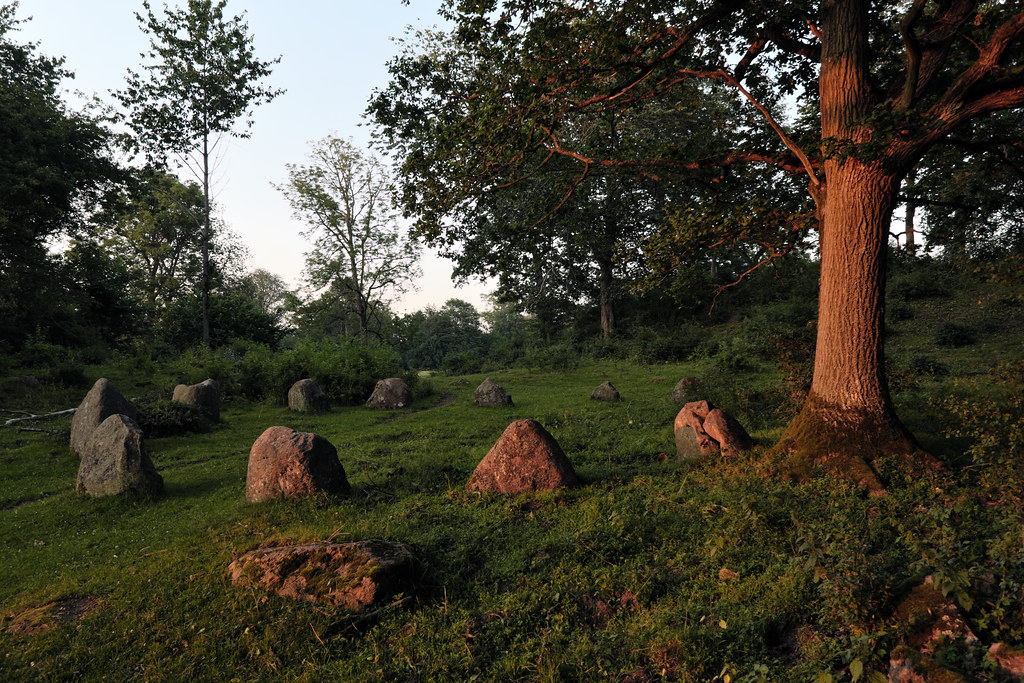
The burial ground is 140 meters long and about 40 meters wide and includes eight ancient remains: a 25-meter-long stone ship, two stone circles, one rectangular stone setting, one square stone formation, and three so-called referees’ rings. The different shapes of graves coming together on one field are certainly an expression of the burial rites known only to those who raised them. The tombs probably come from the Migration Period – the older Iron Age (400-550 AD) – as the excavated grave goods suggest.
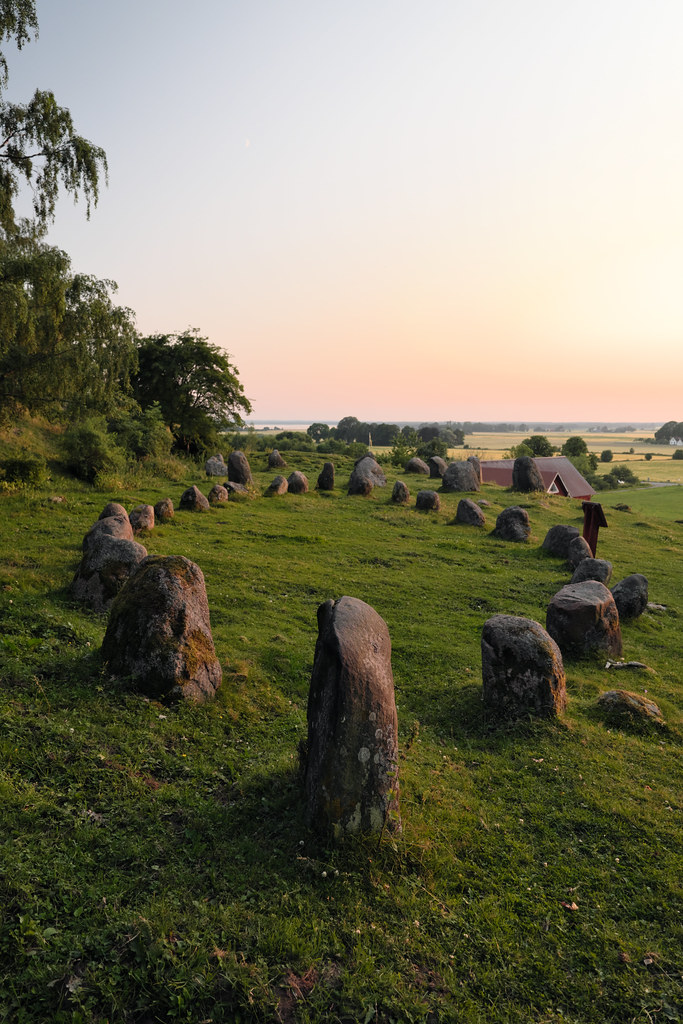
Amundtorp was examined and restored in 1938 by Karl Esaias Sahlström. Excavations revealed scattered burnt bones, pieces of a clay urn, two bronze pins (suggesting a woman’s burial), several glass beads, some fittings and two combs.

Sources (access Nov 2021):
www.vastsverige.com/skara/produkter/amundtorps-skeppssattning
 Thicket Quest